Golden Rose Guide:🧵 Presser Feet: Unlocking Your Sewing Machine’s Potential
When you buy a sewing machine, you’re not just getting the machine itself — you’re also getting a set of accessories that can transform the way you sew. One of the most important of these is the presser foot.
Presser feet are interchangeable attachments that help you perform specific sewing techniques with precision. Every machine comes with a standard presser foot, but there’s a whole world of specialist feet that can make your sewing faster, neater, and more creative.
Tip: Always check your machine’s manual to see which feet are included and how to attach them. If you want to buy extras, make sure they’re compatible with your model — your manufacturer’s website will usually have a full list.
✨ Common Types of Presser Feet and How to Use Them
Standard or Zigzag Foot

The standard presser foot that comes with every sewing machine is designed for both basic and decorative stitches, making it the one you'll likely use most often. It typically handles straight stitches, zigzag stitches, satin stitches, overcasting stitches, and even some simple decorative stitches with ease.
Zip Foot
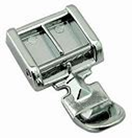
A zip foot is used for sewing zippers. It has gaps on either side, allowing you to sew as close as possible to the zipper teeth. Depending on which side of the zipper you're sewing, place the zipper tape under the appropriate side of the foot. Stitch along one side of the zipper, then repeat on the other side.
Invisible Zip Foot

A concealed or invisible zipper foot is designed to make sewing an invisible zipper easier than using a standard foot. It features small grooves on the underside that fit perfectly over the teeth of an invisible zipper, allowing you to sew as close to the teeth as possible.
Buttonhole Foot
There are various different types of buttonhole feet, depending on whether your machine does a 4 step buttonhole or an automatic buttonhole.
Sliding/Adjustable Buttonhole Foot

Sliding or adjustable buttonhole feet are longer than standard presser feet and come with markings along them. These markings help ensure you're sewing the correct size buttonhole. They also provide a clear view of the buttonhole as you sew, making it easier to see where to start and stop for better accuracy.
Automatic/One Step Buttonhole Foot

This foot is designed for sewing machines capable of creating automatic or one-step buttonholes. It resembles sliding or adjustable buttonhole feet but includes a section at the back where you can insert a button. Slide the foot until the button fits snugly in the gap, then activate a lever or similar mechanism on your machine (refer to your manual for specific instructions). This enables the machine to measure the button and stitch the correctly sized buttonhole in a single step.
Overedge/Overcasting Foot

These sewing machine feet are made to finish the raw edges of fabric just like an overlocker. A small bar in the center of the foot helps wrap the thread around the fabric's edge, giving it a clean finish and preventing fraying. Make sure to choose the right stitch for this foot and consult your manual for guidance.
Walking Foot

A walking foot, or even feed foot, helps your sewing machine feed layers evenly, making it especially handy for quilters working with multiple layers. It's also great for sewing stretchy fabrics like jersey, as it prevents the feed dogs from pulling the layers through at different rates due to the fabric's stretch.
Blind Hem Foot

The foot has a gap down the center, with the right side being wider than the left. The left side is slightly raised since folding the fabric correctly creates three fabric layers that fit under the left side. After pressing the hem under, you fold it back onto the garment's right side. This technique uses a specific machine stitch called the blind hem stitch. To begin, position the foot so the right side is against the fabric fold. The right side of the foot acts as a guide for accurate stitching, ensuring the stitches align properly. As you sew, the stitches lightly catch the main garment fabric, securing it to the hem allowance, with only a minimal amount of stitching visible from the right side.
Rolled Hem Foot
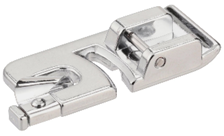
This foot is perfect for creating a narrow rolled hem, ideal for delicate lightweight fabrics like chiffon and organza. It has two sides, with the left side featuring a curved area protruding from the flat part, used to roll the hem for stitching. Start by pressing the desired width of the narrow hem, sew a few stitches, then pause to guide the narrow hem over the curved part of the foot. As you sew, the fabric folds over, forming the narrow rolled hem.
Non-Stick / Teflon Foot

A non-stick or Teflon foot is perfect for smoothly feeding tricky and sticky fabrics like leather, plastic, and suede through your machine, thanks to the non-stick plastic coating on its underside.
Embroidery/Darning Foot
Free motion feet, also known as darning or stippling feet, are perfect for free motion quilting or embroidery. By attaching this foot and lowering or covering your feed dogs, you can sew effortlessly in any direction.
If you visit your sewing machine manufacturers website, it will show you all the different presser feet available for your machine.
Join 'The Sewcial Club' to download the printer friendly quick reference guide.
Happy Sewing!!!!


Comments